
PEER FAQ
Sampling Rate
As of PEER 4.2, the recorded sampling rate from Xon devices will be 500 Hz. Prior to this, the sampling rate was set at 250 Hz. It is important to be aware of this change if you have updated PEER from 4.1 to 4.2 mid-study. At the same time, as of PEER 4.2, the data is in 24-bit format, which provides greater precision and accuracy.
As of PEER 4.2, the recorded sampling rate from Xon devices will be 500 Hz. Prior to this, the sampling rate was set at 250 Hz. It is important to be aware of this change if you have updated PEER from 4.1 to 4.2 mid-study. At the same time, as of PEER 4.2, the data is in 24-bit format, which provides greater precision and accuracy.
|
PEER Marking Timing Accuracy
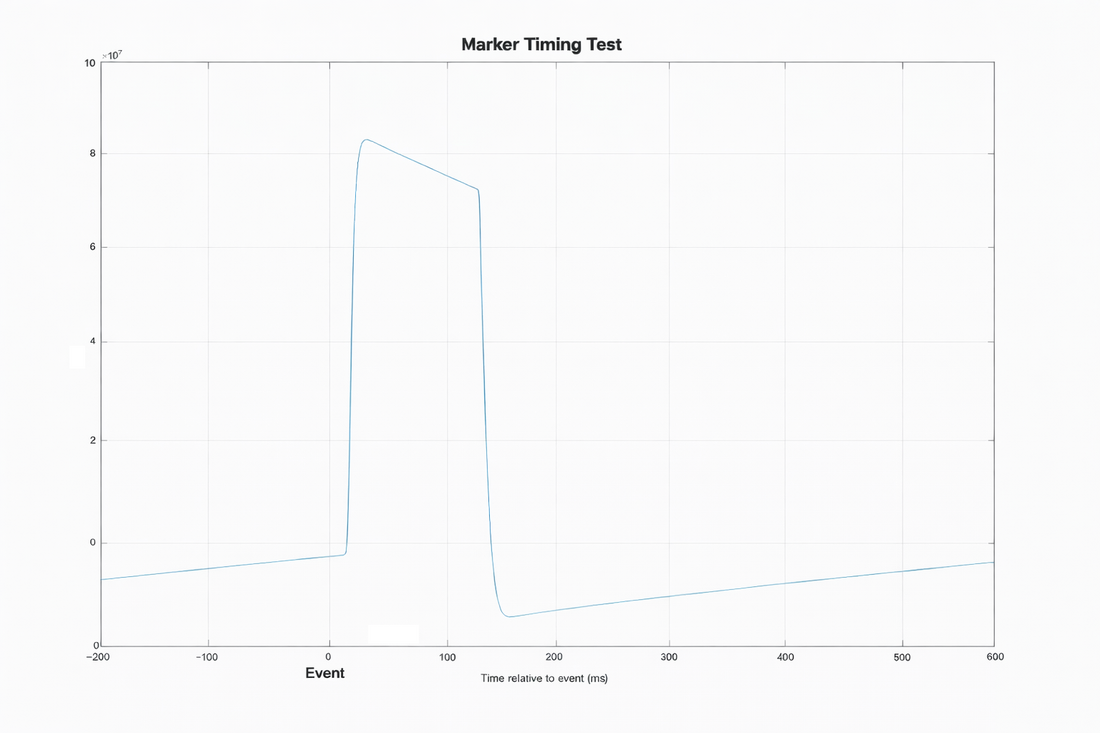
You may wonder if the event-markers in PEER are accurate. Well, the obvious proof is the results - PEER allows you to measure ERPs as evidenced by our Results page. But we have also conducted a photodiode test with PEER, and it clearly shows that our event-markers are accurate. Indeed, visual stimulus timing was validated using a photodiode placed on the display. Photodiode onset latency relative to EEG event markers was computed for all stimulus events in the visual oddball task (S005/S006) using a 50% step threshold. Median display latency was 28 ms (SD = 6.75 ms), consistent with display refresh timing and wireless data transmission latency. The observed variability is consistent with expected display refresh timing and wireless (Bluetooth) data transmission jitter. |
|